Posts

Scientists 'can't explain' Black Death plague outbreak in Madagascar.
Image
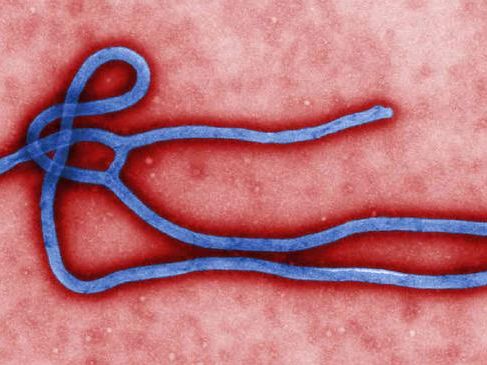
PLAGUE warnings were being issued for nine countries in south-east Africa this week, as authorities rushed to contain an outbreak of Black Death. It's the same virus that led to one of the most devastating pandemics in human history, killing an estimated 25 million people in Medieval Europe. The recent outbreak is believed to have started in Madagascar, an island nation off the African coast, and at least 1300 people have been infected. It's a serious bacterial infection transmitted by fleas, and can be easily treated with antibiotics, but  so far 124 have been reported dead . "Plague, though terrifying, is nothing new in Madagascar, where about 600 cases are reported annually," the World Health Organisation said on its website. However, WHO officials warned there is "something different" about this outbreak, and "health officials couldn't explain it". "Plague is a disease of poverty, because it thrives in places with poo...

Google Earth discovers stone gates in Saudi Arabia: Precursor to more mysterious civilization?

Image
Saudi Arabia is widely considered a barren desert in the ancient ages, but a new discovery hints that the country was home to various archeological sites in the past which are yet to be discovered. A study conducted with the help of Google Earth has discovered ancient giant stone gates in Saudi Arabia, supposedly the remnants of an ancient civilization. With the help of Google Earth imagery, scientists have discovered more than 400 stone gates which were not documented before in the country. David Kennedy, the researcher at the University of Western Australia said that these stone structures will not be visible at the ground level, but once we move up a few hundred feets, these stone gates stand out beautifully lined up. He added that the gates will be visible in satellite images too. "I refer to them as Gates because when you view them from above they look like a simple field gate lying flat, two upright posts on the sides, connected by one or more long bars," said...

'The universe should not actually exist', says CERN scientists

Image
In a recent breakthrough research, CERN Scientists have revealed that the universe which we know it should not exist.The findings from the BASE (Baryon Antibaryon Symmetry Experiment) are published in the journal Nature. The CERN scientists have performed the most meticulous experiment on antiprotons in which they have found a symmetry in nature that they say just shouldn't be possible. The scientists have raised serious concern about the universe that the first matter formed after the Big Bang. Because according to the researchers, particles, and antiparticles destroy one another when they come into contact, if there were exactly equal measures of both, the universe wouldn’t exist—at least not in the form we see it today. So according to them, there should be an imbalance between particles and antiparticles, even if it is only by the tiniest fraction. "All of our observations find a complete symmetry between matter and antimatter, which is why the universe ...

Ancient footprints in Crete challenge theory of human evolution – but what actually made them?

Image
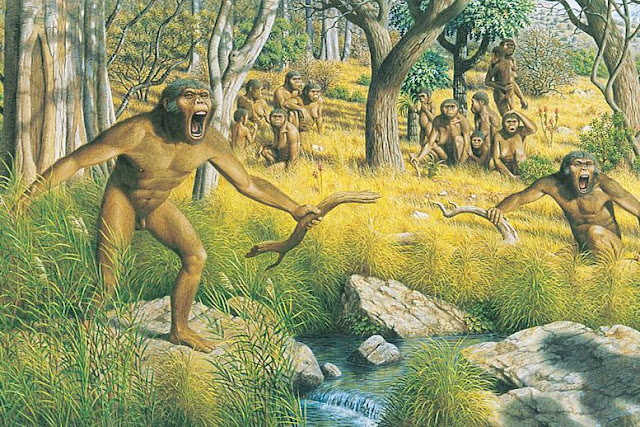
            The oldest known human footprints, from Africa, are by Australopithecus  Matheusvieeira Researchers have discovered some 50 footprints at Trachilos in Crete that are nearly six million years old. It looks like they may be from a hominin – a member of the human species after separation from the chimpanzee lineage. But, as the authors point out themselves, the findings are highly controversial – suggesting human ancestors may have existed in Crete at the same time as they evolved in Africa. So what should we make of it all? If the footprints are confirmed to be from a hominin – additional studies are needed before we can know for sure – it is unquestionably exciting. The oldest footprints confirmed as hominin are the Laetoli series, which date to 3.65 million years. The Laetoli series, found in Laetoli, Tanzania, are now known to have been made by the early human ancestor Australopithecus. It was up to six feet tall and had a foot ...

Two Moons of Uranus Might Crash Into Each Other.

Image
  A new paper predicts that two of the moons of Uranus are on a collision course with each other. Desdemona and Cressida, two small moons, are on pace for a crash in approximately a million years. The collision was predicted by a study uploaded to  arVix  by two researchers at the University of Idaho and one from Wellesley College. Uranus is the fourth-largest planetary mass in the solar system and has both a ring system and a remarkable 27 moons in orbit. The moons are divided into 13 inner moons, 5 major moons, and 9 irregular moons. Mankind's first real encounter with most of these moons was not until the 1986  Voyager 2 flyby . The researchers were studying the ring system when they noticed an odd orbit. It wasn't round or elliptical, but instead resembled a triangle. The odd shape, according to the study, is because of one of the inner moons, Cressida. Named after a title character in Shakespeare's  Troilus and Cressida,  the moon Cressida's...

Scientists have inserted a GIF of a horse into living bacteria -- did your brain just explode?

Image
In a new study published in  Nature , a group of scientists at Harvard have successfully stored a GIF— yes, like a moving meme — into live bacteria ( E. coli  to be specific). It's a weird idea, but scientists have actually been using the genetic wondertool known as CRISPR or "clustered regularly interspaced short palindromic repeats" for  data storage parlor tricks  for some time. CRISPR, explained in a bit more depth  here , makes all sorts of wild things possible and people are rightfully excited about it. Those revelations are often reserved for geneticists and health researchers, but the Harvard experiment and others like it demonstrate CRISPR's utility even beyond its vast, untapped potential in the world of medicine. As a very short primer, CRISPR-associated proteins (in this instance, specifically proteins known as Cas1 and Cas2) act as a DNA version of a computer's Ctrl-X tool, allowing scientists to pinpoint specific segments of DNA, cut th...

Indian scientists discover ‘Saraswati’, a supercluster of galaxies.

Image
Indian scientists have discovered Saraswati, a large supercluster of galaxies located in the direction of the constellation Pisces, and at a distance of 4,000 million light years away from Earth. A team of astronomers from the Inter-University Centre for Astronomy and Astrophysics (IUCAA) and Indian Institute of Science Education and Research (IISER), Pune, and members of two other Indian universities, have discovered this supercluster of galaxies.  Supercluster is a chain of galaxies and galaxy clusters, bound by gravity, often stretching to several hundred times the size of clusters of galaxies, consisting of tens of thousands of galaxies. This newly-discovered Saraswati supercluster, extends over a scale of 600 million light years and may contain the mass  equivalent of over 20 million billion suns. The discovery will be published in the latest issue of The Astrophysical Journal, the premier research journal of the American Astronomical Society....